
Halloween, Samaín & Amagüestu: Autumn Traditions in Asturias
Autumn in Asturias Has Its Own Rhythm
One of the quieter surprises of relocating is discovering that familiar holidays don't always look familiar. Halloween is a perfect example.
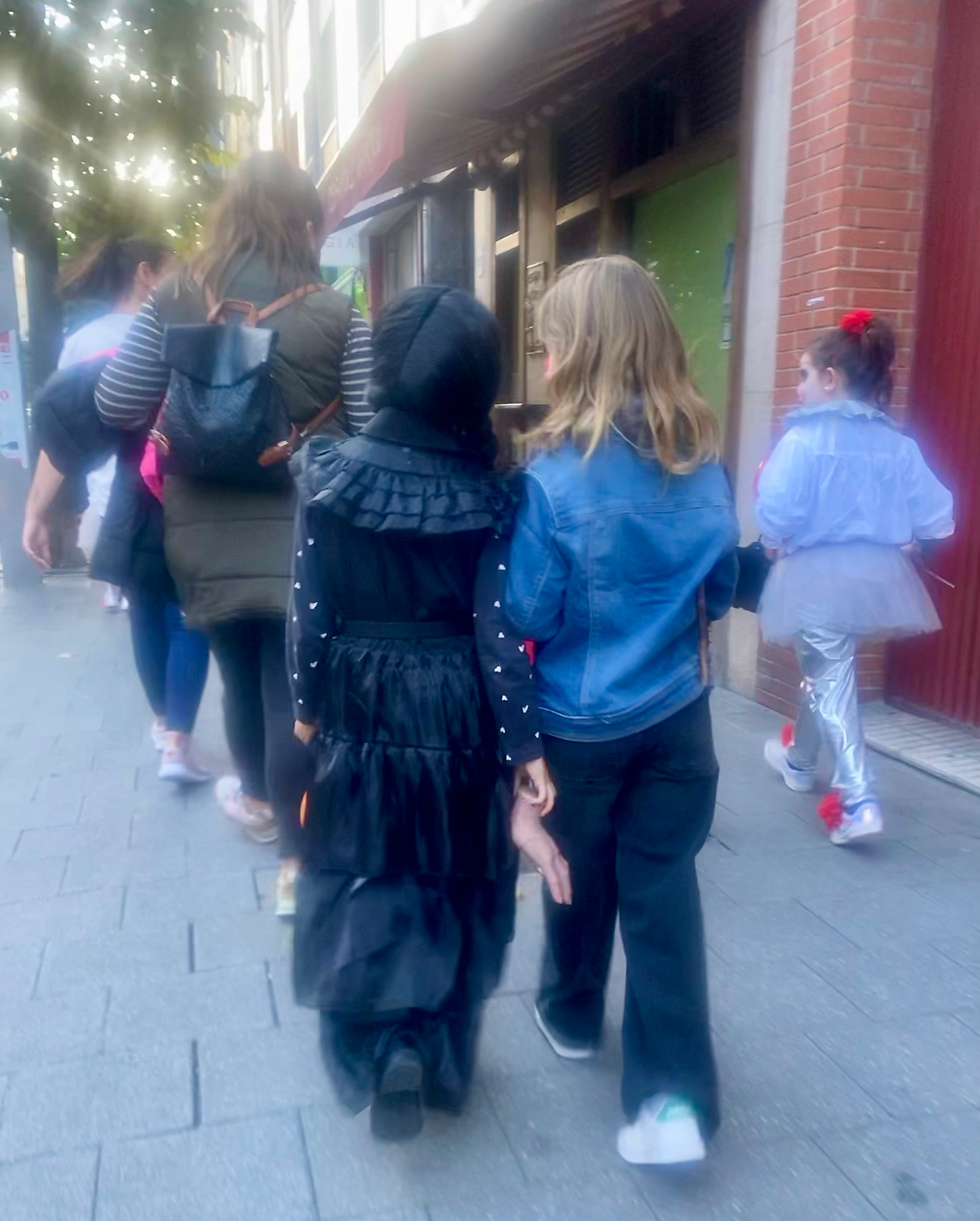
In the United States, I grew up with Halloween as mostly playful: pumpkins on the porch, trick-or-treating, and costumes ranging from cute to clever. Here in Asturias, Halloween leans much more into the scary and the gory. When my daughter was in second grade, some of her classmates arrived at school dressed as the clown from IT. That was my first real clue that we weren't in Kansas anymore.
But Halloween is only part of the story. In Asturias, late October and early November also bring Samaín, an ancient Celtic celebration marking the turn toward winter, and Amagüestu, the beloved autumn festival of chestnuts and cider. Understanding all three helps newcomers see the season, and their new home, more clearly.
The Haunted Walk We Weren't Ready For
One October, my husband, our then nine-year-old daughter, and I lined up for a haunted walk organized by a local neighborhood. We waited more than an hour to get in. We were excited, and honestly, we had no idea what we were getting ourselves into. What reassured me was the line itself: plenty of children were there, many of them younger than my daughter.
Inside, the walk moved through a series of scenes: a frightening hospital, a demonic church, a burning car accident, and more. Actors jumped out from every direction. Within the first few minutes, I was rattled, and my daughter was in tears. I remember thinking I must be the worst mother on the planet.
I assumed the staff would ease up once they saw a crying child. They didn't. They kept the scares coming right to the end, which we reached rather quickly because we more or less ran the whole route.
We laugh about it now. But it taught me something useful: in Spain, "family-friendly" Halloween doesn't necessarily mean what it means back home. Expectations are different, and no one will adjust them for you. A little local context beforehand would have changed our whole night.
Samaín: The Celtic Roots Beneath Halloween
Samaín is the Asturian name for Samhain, the ancient Celtic festival that marked the end of the harvest and the beginning of winter. It traditionally runs from October 31 to November 2 and is, in a real sense, where Halloween comes from.
For the Celtic peoples, of which Asturias was a part, this was a turning point in the year. Herders brought livestock down from the high pastures. They finished the last farm work and stored food for the cold months. People also believed the line between the living and the dead grew thin, so families honored their ancestors, sometimes by setting a place for them at the table.
Traditional Samaín customs in Asturias included:
Bonfires on hilltops and at crossroads, believed to guide visiting souls and keep harmful spirits away.
Offerings of bread, apples, cider, or roasted chestnuts left out for departed family members.
Storytelling around the fire, featuring figures from Asturian mythology like the xanas (water fairies), the mischievous trasgu, the dragon-like cuélebre, and the Güestia, a procession of wandering souls.
As Christianity spread, much of this was folded into All Saints' Day (November 1) and All Souls' Day (November 2). In Asturias today, you will still see families visiting cemeteries with flowers and lighting candles in early November. Día de Todos los Santos (November 1) is a public holiday, so schools and many businesses will be closed.
What I find meaningful is that, at its heart, Samaín was never really about fear. It was about memory, community, and respect for the year's natural cycle.
Understanding that gives the modern, gorier Halloween here some useful context.

Amagüestu: Chestnuts, Sweet Cider, and Community
If Halloween here can feel intense, Amagüestu (also called magüestu or, in Spanish, magosto) is its warm, gentle counterpart. It is Asturias's autumn festival of roasted chestnuts and sidra dulce, the young, lightly fermented sweet cider made from the new apple harvest.
The tradition is old. Neighbors and families would gather outdoors around a fire to roast chestnuts, sing, play the bagpipes, and dance. Over time, it became linked with the days of the dead; one old belief held that each chestnut you ate freed a soul. For centuries, chestnuts were also a staple food in rural Asturias, so the festival honors something genuinely woven into local life.
Today you'll find amagüestos in village squares, cider houses (llagares), parks, and almost every school. Many celebrations include traditional music, children's games, and storytelling. For families new to Asturias, the school amagüestu is often their first local celebration and a lovely way to meet other parents.
What I'd Tell a Family Arriving This Autumn
None of this is a reason to skip the season. It's simply a reason to go in prepared. Here is what I wish I'd known:
Expect Halloween to lean scary. Costumes at school and in town often go for horror rather than cute. Talk with your children ahead of time so nothing catches them off guard.
Ask before you queue. Haunted walks and "passages of terror" are popular, and the presence of young children in line isn't a reliable sign of how intense it is inside. Ask organizers or other parents what to expect, and whether there's an exit partway through.
Don't assume staff will adjust. In our experience, the performers stayed fully in character even with a distressed child in front of them. Decide your plan as a family before you go in.
Lean into Amagüestu. If your children are young or sensitive, a chestnut roast in a village square or a botanical garden is a joyful, low-key way to celebrate the season and connect with local families.
Plan around November 1. All Saints' Day is a public holiday in Spain, with schools closed and businesses operating on reduced hours. It's also a quiet, reflective day for many Asturian families.
Use school as your guide. Schools often host their own amagüestu, and teachers can tell you how they typically handle Halloween in class.
Finding Your Footing, One Season at a Time
That haunted walk is now one of our family's favorite stories. It's also a small reminder of something bigger: so much of settling into a new country lives in the details nobody thinks to mention. Not the visa paperwork or the school enrollment, but how a holiday is celebrated, what "family-friendly" means, or which day everything closes.
Asturias rewards those who take the time to understand it. Its autumn traditions, from the Celtic roots of Samaín to the chestnut fires of Amagüestu, offer a beautiful way into local life once you know what you're stepping into.
At Leap Key, that local context is part of how we accompany families. We've made this move ourselves, and we help others arrive informed, prepared, and ready to enjoy their new home, including its holidays.
If you're considering a move to Asturias and want to talk through what your first year might look like, a Discovery Call is a calm, simple place to start.


Comments